
Australian Cattle Dog Breed - Dog & Puppy Information & Characteristics
Share:


Intelligent, energetic, and remarkably hardworking, the Australian Cattle Dog is a reliable companion. Also known as the Blue Heeler, Red Heeler, or Queensland Heeler, this medium-sized dog was bred to herd livestock across Australia’s vast and challenging landscapes. Today, Australian Cattle Dogs are admired for their courage, energy, and strong devotion to their families.
Whether you are planning to learn more about the breed, or are planning to adopt Australian Cattle Dog puppies, understanding the breed’s natural instincts is key. Knowing the Australian Cattle Dog’s temperament, characteristics, and personality will help you know if the breed is the right fit for your home.
Australian Cattle Dog Physical Appearance
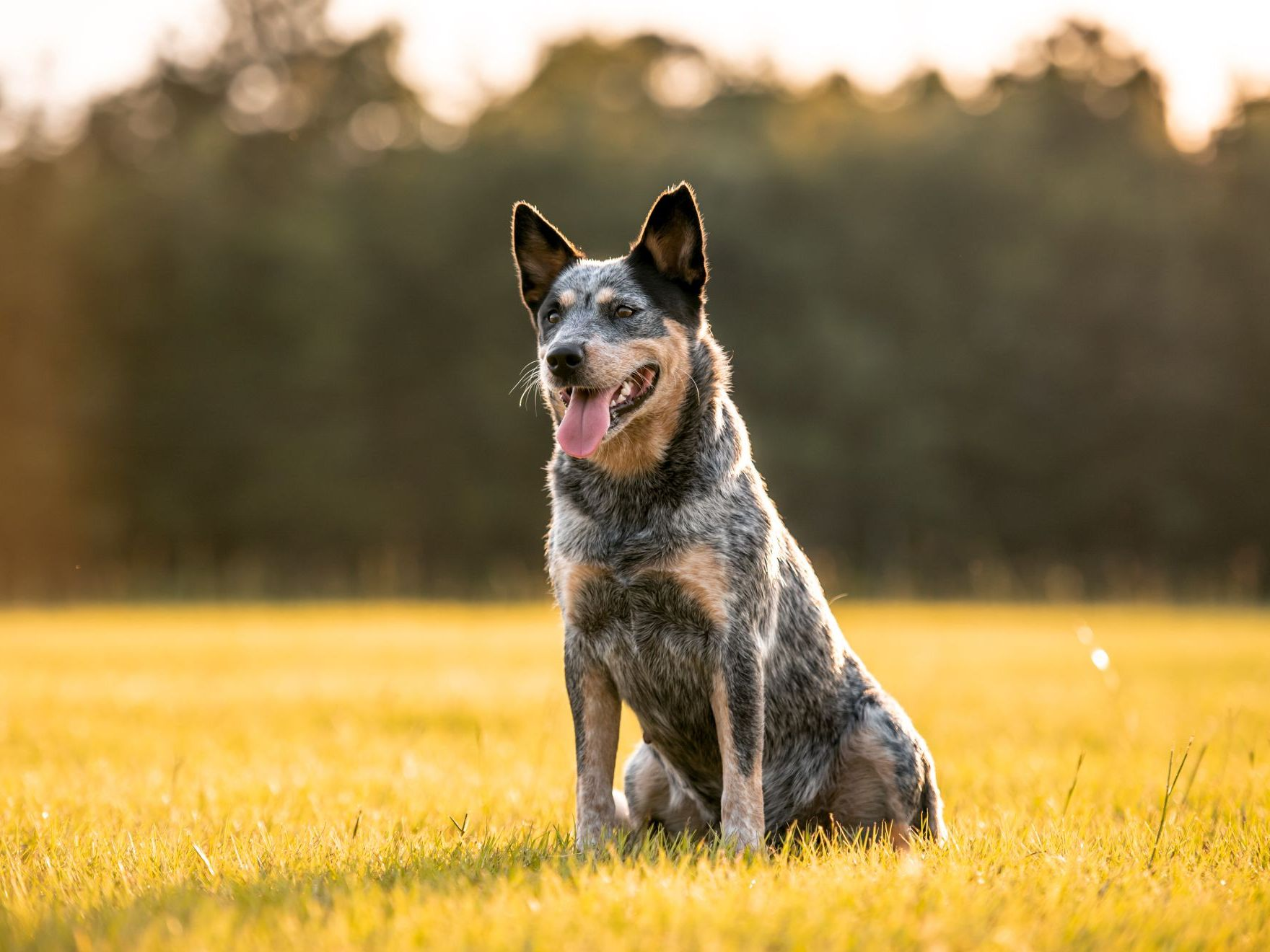
The Australian Cattle Dog is a compact, muscular, and well-balanced working dog built for strength, agility, and endurance. Its broad head, upright ears, dark brown oval-shaped eyes, powerful legs, and level back give the breed an alert and athletic appearance. A full-grown Australian Cattle Dog typically weighs between 35 and 50 lbs and stands between 17 and 20 inches at the shoulder.
One of the most recognizable Australian Cattle Dog characteristics is its short, dense double coat. The outer layer is straight and weather-resistant, while the softer undercoat provides additional protection. Their coats may be blue, blue-mottled, blue-speckled, or evenly red-speckled, sometimes with tan, black, blue, or darker red markings around the head and legs.
Australian Cattle Dog Personality and Temperament
Below is a quick look at the Australian Cattle Dog’s temperament across different traits.
Legend:
⭐ = Poor
⭐⭐⭐⭐⭐ = High/Excellent
| Trait | Rating |
|---|---|
| Friendliness towards people | ⭐⭐⭐ |
| Ability to adapt | ⭐⭐⭐ |
| Behavior towards other pets | ⭐⭐⭐ |
| Energy and playfulness | ⭐⭐⭐⭐⭐ |
| Tendency to obesity | ⭐⭐ |
| Overall health | ⭐⭐⭐⭐ |
| Life expectancy | ⭐⭐⭐⭐⭐ |
| Easy to train | ⭐⭐⭐⭐ |
| Advisable for first-time owners | ⭐⭐ |
The Australian Cattle Dog is highly intelligent, alert, loyal, and energetic. These dogs form strong bonds with their families but may remain cautious around unfamiliar people. Their natural herding instincts can also lead them to chase, nip, or attempt to control moving people and animals. Early socialization, establishing boundaries, and consistent dog training can help an Australian Cattle Dog become a confident and well-mannered companion.
Key Characteristics of Australian Cattle Dogs
Let’s take a look at the Australian Cattle Dog’s personality and other key traits. Keep in mind that values can vary from one dog to another.
| Average lifespan | The Australian Cattle Dog’s lifespan is usually between 12 and 16 years. |
| Weight | A full-grown Australian Cattle Dog generally weighs between 35 and 50 lbs, or approximately 15.9 to 22.7 kg. |
| Height | Adult males typically stand between 18 and 20 inches at the shoulder, while females generally stand between 17 and 19 inches. |
| Coat | They have a short, hard, straight double coat that is relatively easy to maintain. |
| Size | Australian Cattle Dogs are medium-sized dogs with sturdy, compact builds. |
| Personality | They are loyal, intelligent, devoted, and protective in nature. |
| Origin | The Australian Cattle Dogs originated in Australia in 1840 to drive cattle as a working cattle dog. |
Australian Cattle Dog History
Developed in the 19th century, the Australian Cattle Dog was bred to herd livestock across the Australian Outback. When British settlers arrived, they found that traditional British sheepdogs struggled to cope with the punishing heat, vast distances, and harsh terrain of the continent. In the 1830s, pioneer stockman Thomas Hall was believed to have crossed Dingoes with imported blue merle Collie -type dogs to create a quiet, heat-tolerant worker known as Hall’s Heeler.
Later breeders, including the Bagust brothers, are traditionally credited with introducing breeds such as the Dalmatian and Black and Tan Kelpie to strengthen qualities like loyalty, endurance, and herding ability. These hardy dogs became highly valued for quietly nipping at the heels of stubborn livestock, earning the nicknames Blue Heeler, Red Heeler, and Queensland Heeler. Robert Kaleski developed an early breed standard in 1902, helping establish the Australian Cattle Dog as an enduring symbol of Australia’s pioneering and working-dog history.
Types of Australian Cattle Dog Coat Colors
While all Australian cattle dogs belong to the same breed, they are generally categorized by their two main coat colors. Australian Cattle Dog puppies are usually born mostly white, though some may already show solid color patches around their head or tail. Their blue or red speckling gradually becomes more noticeable as they grow older. Irrespective of the color, both types of dogs share the same temperament, intelligence, and working abilities.
Blue Australian Cattle Dogs
The famous "Blue Heeler" features a coat with gorgeous blue, blue-mottled, or blue-speckled patterns. They may also have solid black, blue, or tan markings around their head, giving them an alert, masked appearance.
Red Australian Cattle Dogs
Affectionately known as "Red Heelers," these dogs develop a red-speckled coat as they mature. This warm coloring can be accompanied by darker red patches on the head.
How Long Do Australian Cattle Dogs Live?
The average Australian Cattle Dog lifespan is between 12 and 16 years. But, with the right care, health habits, and nutrition , they can live well beyond these years.
How to Care for an Australian Cattle Dog?
Proper Australian Cattle Dog care starts with understanding the breed’s active, intelligent, and hardworking nature. As working dogs, they do well in households that can meet their needs.
- Exercise: Australian Cattle Dogs require daily exercise. Walks, games of fetch, and mentally stimulating activities are key.
- Training: Highly intelligent and eager to work. They excel with consistent training, obedience exercises, and problem-solving activities.
- Environment: They thrive in homes with access to outdoor space and plenty of opportunities to stay active.
- Companionship: This breed forms strong bonds with its family.
- Veterinary Care: Regular checkups, vaccinations, joint monitoring, parasite prevention, and dog’s teeth maintenance will support long-term health.
Australian Cattle Dog Grooming and Maintenance
Australian cattle dogs are relatively low maintenance, but they still require regular grooming to stay clean and comfortable.
- Brush the coat once or twice a week to remove loose hair and help maintain coat health. Brush more frequently during heavy shedding seasons.
- Bathe only when necessary using a dog-safe shampoo. Frequent bathing can strip the coat’s natural oils.
- Brush the teeth regularly using dog-safe toothpaste. Adding dental dog treats alongside toothbrushing will keep your dog’s mouth clean and healthy.
- Trim the nails whenever they become long or begin clicking against hard floors.
- Check the ears regularly and consult a veterinarian if you notice redness, discharge, irritation, or an unpleasant odor.
Are Australian Cattle Dogs Suitable for Indoor Living in the Philippines?
Australian cattle dogs can generally adapt to indoor living in the Philippines as long as they get enough exercise and mental stimulation. However, they are better suited to active households that can maintain a consistent exercise routine and offer safe opportunities to move and explore. To help your Australian Cattle Dog thrive, provide a daily exercise routine, ensure access to fresh water, and avoid prolonged exposure to extreme heat.
Australian Cattle Dog Nutrition and Diet
Australian Cattle Dogs are energetic working dogs that require nutrition tailored to their life stage and activity level. This hardworking breed thrives on complete and balanced dog food that is rich in essential vitamins and nutrients.
- High-quality animal protein: Chicken, beef, lamb, and fish help maintain lean muscle mass and support daily energy needs.
- Joint-supporting nutrients: Glucosamine, chondroitin, and Omega-3 fatty acids help support joint health in this highly active breed.
- Healthy fats: Provide concentrated energy and support skin and coat health.
- Essential vitamins and minerals: Calcium, phosphorus, zinc, and B vitamins promote bone strength, immunity, and overall wellness.
- Complex carbohydrates: Whole grains and vegetables provide steady energy for active dogs.
- Adequate hydration: Fresh water is essential, especially after exercise and outdoor activities.
Australian Cattle Dogs are energetic working dogs that thrive on proper nutrition. Puppies need nutrient-rich food for healthy growth, while adults benefit from protein-rich diets that support endurance and muscle maintenance. Senior dogs may require additional support for mobility and healthy ageing.
Portion sizes should be adjusted according to exercise levels and body condition. Following feeding guidelines on your chosen dog food will serve as a good starting point. But for personalized feeding recommendations, consult a veterinarian.
Australian Cattle Dog: A Smart Worker with Endless Loyalty
The Australian Cattle Dog combines intelligence, athleticism, courage, and devotion in one capable working breed. Originally developed to manage cattle across the demanding Australian Outback, these dogs are happiest when given regular exercise, mental challenges, and meaningful interaction with their families.
With early socialization, consistent training, proper nutrition, and an active lifestyle, an Australian Cattle Dog can become a loyal and engaging companion for the right household. Visit the PEDIGREE® blog for more helpful information on dog breeds , nutrition, training, and everyday pet care.
FAQs
No, Australian Cattle Dogs are not naturally aggressive in nature. But they can be protective and cautious around unfamiliar people or environments. With proper training, socialization, and regular mental stimulation, you can help encourage balanced and friendly behavior.
Some of the common behavior problem with Australian cattle dogs can include chasing, aggressive barking, nipping, and boredom-related destructive habits. However, these tendencies often occur when the breed does not receive enough physical exercise or mental stimulation.
An Australian Cattle Dog can be a good house dog for an active household that provides substantial daily exercise, consistent training, and mental enrichment. The breed is unlikely to thrive in a home where it is expected to remain inactive for long periods.