Dog Treats: Buy the Best Dog Treats Online
Discover the full range of irresistible PEDIGREE® Dog Treats! Our wide variety of high-quality dog treats is perfect for training, rewarding good behavior, or simply sharing enjoyable bonding moments to delight your canine companion!
Filter




What Are Dog Treats?
Dog treats are specially made snacks that can be given alongside your dog's main meals. They come in a variety of shapes, textures, and flavors, with options available for dogs of different breeds and sizes. They can be used for rewarding good behavior, supporting training, or simply sharing a special moment with your dog.
Some treats are also designed for specific purposes, such as providing a satisfying chew or supporting dental care. When choosing high-quality dog treats, consider your dog's age, size, preferences, and the feeding guide provided on the pack.
PEDIGREE® Range of Dog Treats
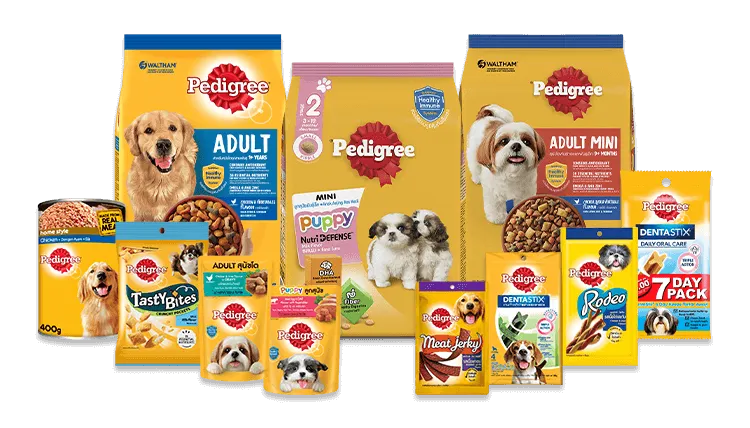
PEDIGREE® dog treats offer you a responsible way of rewarding your fur baby. Designed for occasions when you feel like pampering or training your dog, our dog treat range comes in different formats and flavors. Whether you need dog treats for puppies, adult dog training treats, specialized dental care treats, PEDIGREE® has you covered with nutritious and delicious options.
PEDIGREE® Tasty Bites
PEDIGREE® Tasty Bites come in different formats, making them ideal for training, rewarding good behavior, or simply treating your dog.
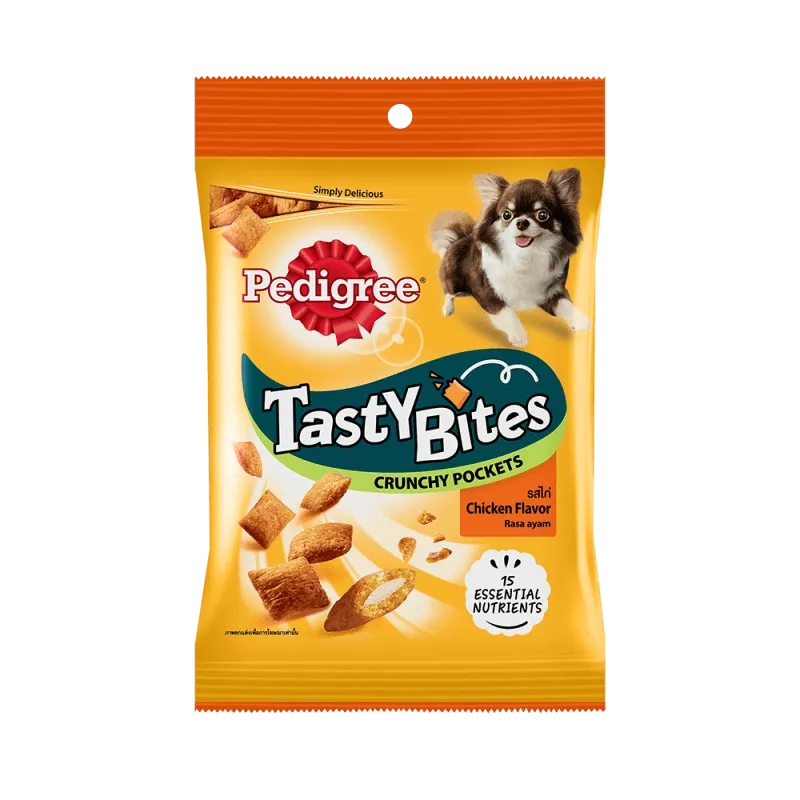
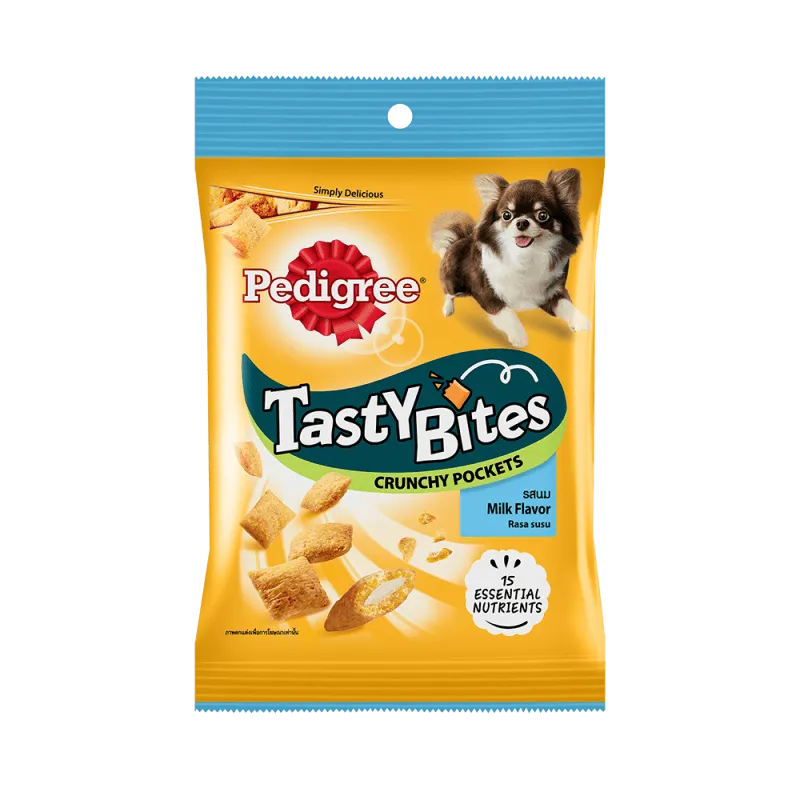
PEDIGREE® Tasty Bites Crunchy Pockets
Delightfully crunchy on the outside and deliciously creamy on the inside, PEDIGREE® Tasty Bites Crunchy Pockets offer an enjoyable combination of textures for treat time.
PEDIGREE® Tasty Bites Chewy Bones
Soft, chewy, and bone-shaped, PEDIGREE® Tasty Bites Chewy Bones make a tasty everyday reward for dogs.
PEDIGREE® Schmackos™
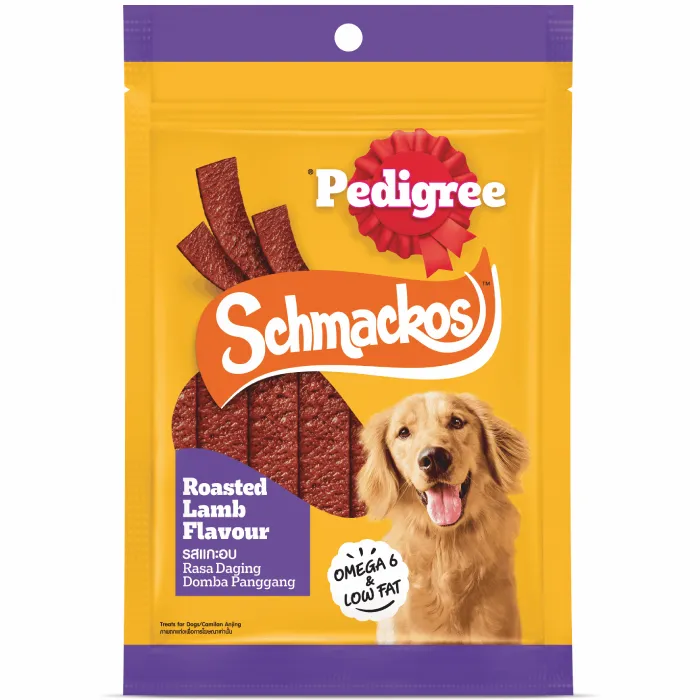
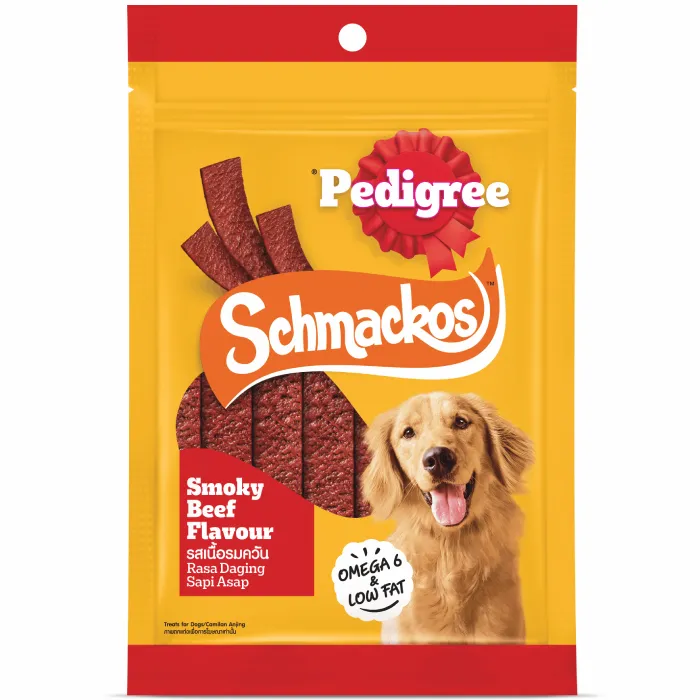
PEDIGREE® Schmackos™ are high-protein low fat treats. They’re soft, tender chewy dog treats made for rewarding, training, or simply sharing an enjoyable moment with your dog.
What Are The Benefits of PEDIGREE® Dog Treats?
- Ideal for rewarding good behavior, positive reinforcement during training, or sharing special bonding moments.
- Developed with nutrition and pet care research from the Waltham Petcare Science Institute .
- Offers different treat formats for different needs, including everyday rewards, satisfying chews, and dental treats.
- Includes options designed for dogs of different sizes and life stages, making it easier to find a suitable treat for your dog.
How Many Treats Per Day Should You Give A Dog or Puppy?
As a general rule, treats should make up no more than 10% of your dog's daily calorie intake. This includes all types of treats, whether they're casual dog treats, dog training treats, or dog dental treats. Moreover, it's important to remember that dog treats should never replace your dog's main meals. Always check the feeding guide on the pack and adjust your dog's main meals when necessary to account for the additional calories from treats. For more information on dog feeding, you can refer to our feeding guidelines .
How To Use Dog Treats for Training?
Dog treats are a fantastic tool for rewarding your furry friend. To successfully use dog treats for training, you can start by using smaller treats or breaking larger treats into smaller pieces that your dog can eat quickly. Give your dog a treat immediately after they perform a desired behavior so they can associate the reward with the action. Pairing the treat with a consistent positive cue, such as "good" or "yes," can also help reinforce the behavior. Remember to account for training treats as part of your dog's daily calorie intake and always follow the feeding guide provided on the pack.
Why Are Treats So Important for Dogs?
Treats do more than satisfy a craving. They help build the bond between you and your dog and give you a simple way to communicate what behavior you want to see. A treat given right after your dog does something well shows them they are on the right track, and over time this makes training faster and more enjoyable for both of you.
How to Choose The Best Treat For Your Dog?
The best dog treats for your pet will depend on their age, size, preferences, and how you plan to use the treat. Smaller, easy-to-eat treats can work well for training and rewarding, while bigger chewy treats provide a more satisfying treat-time experience. Dental treats can also complement your dog's regular oral care routine.
For puppies, choose treats specifically made for their life stage. For adult dogs, consider their size, preferred texture, and the purpose of the treat. Whichever type you choose, always check the feeding guide and select a treat suited to your dog's size and life stage.
Frequently Asked Questions
Yes, dog treats can be healthy if given in moderation. They help strengthen bonds and are useful for training. Opt for high-quality options like PEDIGREE® dog treats and manage portions carefully.
Dog treats can be given during training, after desired behavior, during bonding activities, or as an occasional reward. When using treats for training, give the treat soon after the desired behavior so your dog can associate the action with the reward.
There is no single healthiest dog treat for every dog. A good choice should be carefully formulated, appropriate for your dog's age and size, and given according to the recommended feeding guide. It’s also important to consider the purpose of the treat and keep treats within your dog’s overall daily calorie intake.
The best dog treats for puppy training are small, soft, and bite-sized so your puppy can eat them quickly and stay focused during each session. Choose treats that can be given in small portions, are appropriate for your puppy's age, and fit within their daily calorie intake. Always follow the feeding guide on the pack and adjust the portions as needed.